Have you ever struggled to carry heavy shopping bags, climb several flights of stairs or lift something from the floor? These everyday activities require strength, balance, coordination and mobility. Functional training is a form of exercise that develops these physical abilities through movements that support everyday activities.
Unlike workout routines that focus only on individual muscles, functional training often combines multiple muscle groups through exercises such as squats, lunges, pushes, pulls, carries and rotational movements.
Whether you are a beginner, an office professional or someone looking to improve overall fitness, functional training can help you develop practical strength, improve movement control and build a more balanced exercise routine.
In this guide, we explore what functional training is, its benefits, the best functional training exercises and how you can incorporate them into your fitness routine.
What Is Functional Training?
Functional training is a type of exercise that focuses on improving strength, balance, coordination, flexibility and movement patterns used in everyday life.
It generally involves movements that engage multiple muscles and joints together rather than isolating one muscle group at a time.
For example:
- Squats help develop strength for sitting down and standing up.
- Lunges improve lower-body strength and single-leg control.
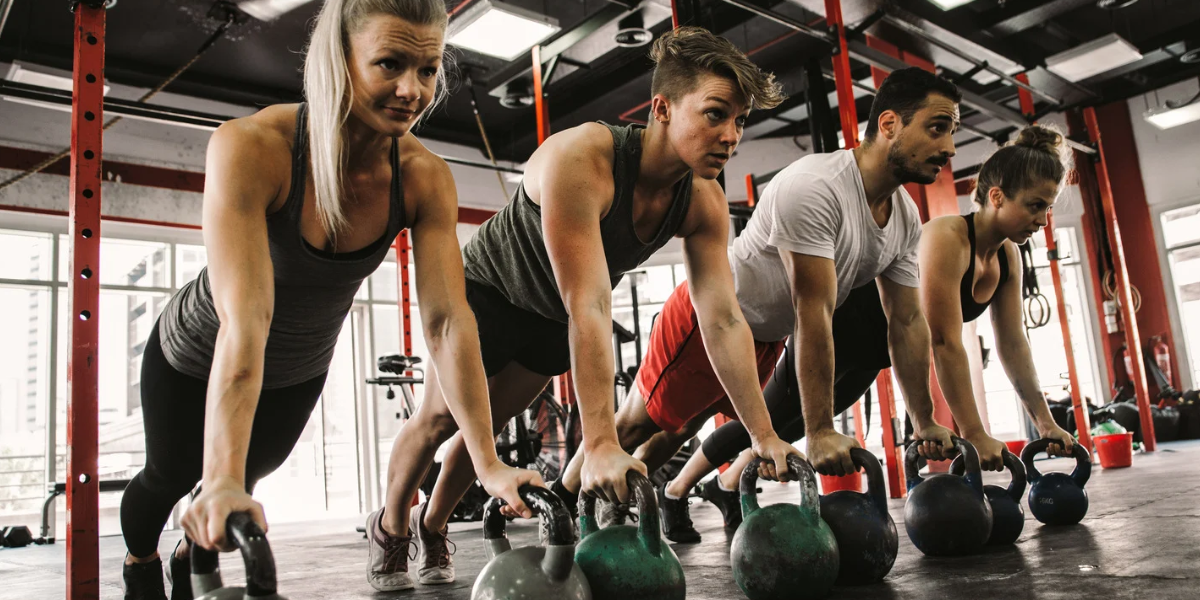
- Push-ups develop upper-body pushing strength.
- Rows strengthen the muscles involved in pulling movements.
- Farmer’s carries challenge grip strength, posture and core stability.
The purpose of functional training is to improve how your body moves and performs different physical tasks.
It can be adapted for beginners, experienced gym-goers, older adults and people with different fitness objectives.
How Is Functional Training Different from Traditional Gym Training?
Traditional strength training often includes exercises designed to target specific muscles or muscle groups. Functional training generally places greater emphasis on coordinated movements involving multiple muscle groups.
However, these approaches are not opposites. Both can be valuable parts of a well-designed fitness program.
| Traditional Strength Training | Functional Training |
|---|---|
| Often focuses on individual muscles or muscle groups | Often combines multiple muscle groups |
| May use machines, dumbbells and barbells | Uses body weight, free weights, cables and other equipment |
| Can focus on muscle size and strength | Often focuses on strength, balance and movement control |
| Includes exercises such as biceps curls and leg extensions | Includes exercises such as squats, lunges and carries |
| Can support muscle development | Can support everyday movement and physical performance |
For example, a biceps curl primarily trains the elbow-flexing muscles, while a farmer’s carry challenges your grip, shoulders, trunk and ability to maintain posture while moving.
A balanced gym routine can include both traditional resistance training and functional exercises.
8 Best Functional Training Exercises to Include in Your Workout
You do not need complicated equipment to begin functional training. Many effective exercises can be performed using body weight, dumbbells or resistance bands.
Here are eight functional training exercises worth including in a workout routine.
1. Squats
<text></text>
Squats are among the most useful functional exercises for developing lower-body strength.
They involve the quadriceps, glutes and other muscles that help control movement around the hips and knees.
How to perform a squat:
- Stand with your feet approximately shoulder-width apart.
- Keep your chest comfortably upright and brace your core.
- Push your hips back and bend your knees.
- Lower yourself as far as you can while maintaining control.
- Push through your feet to return to the starting position.
Benefits of squats:
- Develop lower-body strength.
- Improve control during sitting and standing movements.
- Strengthen the glutes and thighs.
- Support overall lower-body fitness.
Beginners can start with bodyweight squats before progressing to dumbbell or barbell variations.
2. Lunges
Lunges are functional exercises that develop lower-body strength, balance and coordination.
Because each leg works separately, lunges can also help identify differences in strength and control between the two sides.
How to perform a forward lunge:
- Stand upright with your feet hip-width apart.
- Take a comfortable step forward.
- Bend both knees while maintaining balance.
- Lower your body under control.
- Push through your front foot to return to the starting position.
- Repeat with the opposite leg.
Benefits of lunges:
- Improve single-leg strength.
- Develop balance and coordination.
- Strengthen the quadriceps and glutes.
- Improve lower-body movement control.
If you are a beginner, start with supported or stationary lunges before attempting more challenging variations.
3. Push-Ups
Push-ups are bodyweight exercises that develop upper-body pushing strength.
They primarily work the chest, shoulders and triceps while also requiring core stability.
How to perform a push-up:
- Begin in a plank position with your hands slightly wider than shoulder-width.
- Keep your body aligned from head to heels.
- Bend your elbows and lower your chest towards the floor.
- Push through your hands to return to the starting position.
Benefits of push-ups:
- Develop upper-body strength.
- Improve core stability.
- Strengthen the chest, shoulders and triceps.
- Require minimal equipment.
Beginners can perform wall push-ups or incline push-ups before progressing to standard push-ups.
4. Planks
Planks are core-strengthening exercises that develop the ability to maintain a stable body position.
Your abdominal muscles, shoulders and other trunk muscles work together to hold the position.
How to perform a plank:
- Place your forearms on the floor.
- Extend your legs behind you.
- Keep your body aligned without allowing your hips to drop or rise excessively.
- Engage your abdominal muscles.
- Hold the position while breathing normally.
Benefits of planks:
- Develop core endurance.
- Improve trunk stability.
- Support posture and controlled movement.
- Strengthen the muscles involved in maintaining body alignment.
Start with shorter holds and gradually increase the duration as your control improves.
5. Farmer’s Carry
Farmer’s carries are simple but effective functional exercises that involve walking while holding weights.
They challenge several areas of fitness at once, including grip strength, posture, core stability and walking control.
How to perform a farmer’s carry:
- Hold a dumbbell or kettlebell in each hand.
- Stand upright with your shoulders relaxed.
- Keep your abdominal muscles engaged.
- Walk forward with controlled steps.
- Maintain an upright posture throughout the movement.
Benefits of farmer’s carries:
- Improve grip strength.
- Develop core stability.
- Strengthen the muscles supporting posture.
- Challenge full-body coordination.
Start with light weights and a short walking distance. Avoid using loads that cause you to lean or lose control.
6. Kettlebell Deadlifts
Kettlebell deadlifts develop strength in the hips and posterior chain, including the glutes, hamstrings and back muscles.
They also teach the hip-hinge movement pattern, which is useful when learning how to lift objects from the floor.
How to perform a kettlebell deadlift:
- Place a kettlebell between your feet.
- Stand with your feet approximately hip-width apart.
- Push your hips backwards while slightly bending your knees.
- Hold the kettlebell with both hands.
- Push through your feet and extend your hips to stand upright.
- Lower the weight with control.
Benefits of kettlebell deadlifts:
- Develop hip and lower-body strength.
- Strengthen the glutes and hamstrings.
- Improve hip-hinge movement.
- Build strength for controlled lifting tasks.
Beginners should learn the movement with light resistance and seek guidance if they are unsure about their technique.
7. Step-Ups
Step-ups are functional exercises that develop lower-body strength and balance.
They involve stepping onto an elevated platform, making them useful for practising movements similar to climbing stairs.
How to perform step-ups:
- Stand in front of a stable, suitable-height platform.
- Place one foot firmly on the platform.
- Push through that foot to step up.
- Bring the other foot onto the platform.
- Step down carefully and repeat with the opposite leg.
Benefits of step-ups:
- Strengthen the quadriceps and glutes.
- Develop single-leg strength.
- Improve balance and coordination.
- Support stair-climbing ability.
Choose a platform height that allows you to move comfortably without excessive strain.
8. Resistance Band Rows
Resistance band rows are pulling exercises that strengthen the upper back and improve control during pulling movements.
How to perform resistance band rows:
- Secure a resistance band to a stable anchor point.
- Hold the handles with both hands.
- Step back until there is light tension in the band.
- Pull your hands towards your torso.
- Squeeze your shoulder blades gently together.
- Return slowly to the starting position.
Benefits of resistance band rows:
- Strengthen the upper back.
- Develop pulling strength.
- Improve shoulder control.
- Provide an accessible exercise option for beginners.
Always ensure the band and anchor point are secure before starting.
Benefits of Functional Training
Functional training offers several benefits when included in a well-planned exercise routine.
1. Improves Everyday Movement
Many functional exercises develop movements used in daily activities, such as bending, lifting, carrying, pushing and climbing.
For example, squats and step-ups develop lower-body strength, while farmer’s carries challenge your ability to walk while holding objects.
2. Develops Full-Body Strength
Functional exercises often involve several muscle groups working together.
This allows you to develop coordinated strength rather than focusing only on individual muscles.
3. Improves Balance and Coordination
Exercises such as lunges, step-ups and single-leg movements challenge your ability to control your body.
Regular practice can help develop balance and coordination, provided the exercises are appropriate for your fitness level.
4. Strengthens Core Muscles
Your core helps stabilise your body during many functional movements.
Exercises such as planks, carries and controlled lifting movements challenge the muscles around your trunk.
5. Supports Overall Fitness
Functional training can be combined with cardiovascular exercise and traditional resistance training to create a balanced fitness routine.
Depending on the exercises and workout intensity, it can also contribute to muscular endurance and cardiovascular activity.
6. Can Be Adapted to Different Fitness Levels
Functional training is not limited to athletes or experienced gym-goers.
Beginners can start with bodyweight movements and gradually progress to resistance bands, dumbbells and more challenging exercises.
Functional Training Workout Plan for Beginners
If you are new to functional fitness, start with a simple routine that covers different movement patterns.
The following workout is an example of a beginner-friendly full-body session.
| Exercise | Sets | Repetitions |
|---|---|---|
| Bodyweight Squats | 2 | 10–12 |
| Incline Push-Ups | 2 | 8–10 |
| Stationary Lunges | 2 | 8 per leg |
| Resistance Band Rows | 2 | 10–12 |
| Plank | 2 | 15–30 seconds |
| Farmer’s Carry | 2 | 20–30 seconds |
Suggested session structure:
- Warm-up: 5–10 minutes
- Functional exercises: 20–25 minutes
- Cool-down: 5 minutes
Start with manageable resistance and rest between sets as needed. You do not need to perform every exercise at maximum effort.
Beginners can try this routine two or three times per week, with recovery time between demanding sessions.
As your strength and movement control improve, you can gradually increase repetitions, resistance or workout complexity.
Is Functional Training Good for Weight Loss?
Functional training can support a weight-loss program because it involves physical activity and can help develop or maintain muscle strength.
However, functional training is not automatically more effective for weight loss than other forms of exercise.
Successful weight management generally involves a combination of:
- Regular physical activity
- Strength training
- Cardiovascular exercise
- Balanced nutrition
- Adequate sleep
- Consistent lifestyle habits
If weight loss is your primary goal, combining functional exercises with an appropriate nutrition plan and regular cardio can be a practical approach.
You can also explore weight loss programs in Thane West to learn more about structured fitness options.
Functional Training vs HIIT: What Is the Difference?
Functional training and High-Intensity Interval Training (HIIT) are different exercise approaches.
Functional training describes the movements and physical abilities being developed. HIIT describes a training format that alternates periods of higher-intensity activity with recovery periods.
They can also be combined. For example, a workout might include squats, lunges and step-ups performed in timed intervals.
| Functional Training | HIIT |
|---|---|
| Focuses on movement patterns and physical abilities | Focuses on alternating work and recovery intervals |
| Can be performed at different intensities | Usually involves periods of vigorous effort |
| May use body weight, bands, dumbbells or other equipment | Can use cardio equipment or bodyweight exercises |
| Emphasises movement control and coordination | Emphasises work intensity and conditioning |
| Suitable for a wide range of fitness levels when adapted | Requires careful adjustment, especially for beginners |
Neither approach is universally better. The right choice depends on your fitness goals, experience and exercise preferences.
Who Should Try Functional Training?
Functional training can be useful for many people when the exercises are selected appropriately.
Beginners
People starting their fitness journey can use bodyweight squats, incline push-ups and supported lunges to develop basic strength and movement control.
Working Professionals
People who spend long hours sitting can include strength, mobility and movement exercises as part of a balanced physical activity routine.
Women Looking to Improve Overall Fitness
Functional exercises can help women develop strength, coordination and confidence with different movements. The exercises can be adjusted according to individual experience and fitness goals.
Explore the ladies gym in Thane to learn about women’s fitness options.
Experienced Gym-Goers
People who already follow strength-training programs can include functional movements to develop balance, coordination, grip strength and movement variety.
Functional Training in Thane: Finding a Convenient Fitness Routine
If you are considering functional training, choosing a gym that fits into your daily schedule can make it easier to remain consistent.
People living in different parts of Thane may look for convenient fitness options close to home or work.
For example:
- Thane West and Samata Nagar: Residents can compare fitness centres based on accessibility, training facilities and available workout programs.
- Manpada and Hiranandani Meadows: People in these neighbourhoods may prefer a gym that fits into their daily commute.
- Majiwada and Kolshet: Residents can consider nearby fitness options that offer structured strength and conditioning workouts.
- Vartak Nagar and Pokhran Road: Convenient access and suitable training schedules may be important when selecting a fitness centre.
- Ghodbunder Road and Kasarvadavali: People living along this stretch can compare travel time and available fitness facilities.
- Wagle Estate: Working professionals may prefer workout schedules that fit around office hours.
Meera’s Fitness Centre is located in Samata Nagar, Thane West. If you are considering training there, contact the centre to confirm the availability of functional training sessions, equipment and trainer guidance.
You can also meet the trainers or contact Meera’s Fitness Centre to enquire about available fitness programs.
Common Functional Training Mistakes to Avoid
Functional training should focus on controlled movement and gradual improvement. Avoid these common mistakes:
1. Using weights that are too heavy: Start with resistance that allows you to maintain proper technique.
2. Ignoring movement quality: Completing more repetitions is not useful if your posture and control deteriorate.
3. Skipping warm-ups: Prepare your body with light activity and movements relevant to your workout.
4. Attempting advanced exercises too early: Master basic movements before progressing to more demanding variations.
5. Training without recovery: Allow sufficient time for recovery between demanding sessions.
6. Treating every workout as a competition: Functional training should match your ability and goals rather than how much someone else can lift.
Frequently Asked Questions
What is functional training in the gym?
Functional training is a form of exercise that develops strength, balance, coordination and movement control through exercises involving multiple muscles and joints. Common examples include squats, lunges, push-ups, rows and farmer’s carries.
What are the best functional training exercises for beginners?
Bodyweight squats, incline push-ups, supported lunges, resistance band rows, planks and step-ups are useful starting exercises. Choose variations that match your current fitness level.
Is functional training good for weight loss?
Functional training can support weight management by increasing physical activity and developing muscle strength. For sustainable weight loss, combine exercise with balanced nutrition and an appropriate overall activity routine.
How many days a week should I do functional training?
Beginners can start with two or three sessions per week, allowing recovery between demanding workouts. Training frequency should depend on exercise intensity, fitness level and recovery.
Can functional training build muscle?
Yes. Functional exercises can develop muscle strength and size when they provide sufficient resistance and training stimulus. However, muscle-building goals may also benefit from a structured progressive resistance training program.
Is functional training suitable for women?
Yes. Functional training can be adapted for women at different fitness levels. Exercises can be selected to support strength, balance, coordination and general fitness.
What equipment is used in functional training?
Common equipment includes dumbbells, kettlebells, resistance bands, medicine balls, stability balls, cable machines and bodyweight exercise stations. Many functional exercises can also be performed without equipment.
Is functional training better than traditional weight training?
Neither is universally better. Functional training focuses on coordinated movements and practical physical abilities, while traditional resistance training can provide more targeted muscle development. Combining both can create a balanced workout program.
Conclusion
Functional training is a practical way to develop strength, balance, coordination and movement control through exercises that involve multiple muscle groups.
From squats and lunges to push-ups, planks and farmer’s carries, these exercises can be adapted to different fitness levels and incorporated into a balanced gym routine.
Whether you are a beginner or an experienced gym-goer, start with movements you can perform comfortably, focus on proper technique and gradually increase the challenge as your fitness improves.
If you are looking to improve your strength and overall fitness, explore the training options at Meera’s Fitness Centre and speak with its trainers about a suitable workout routine.