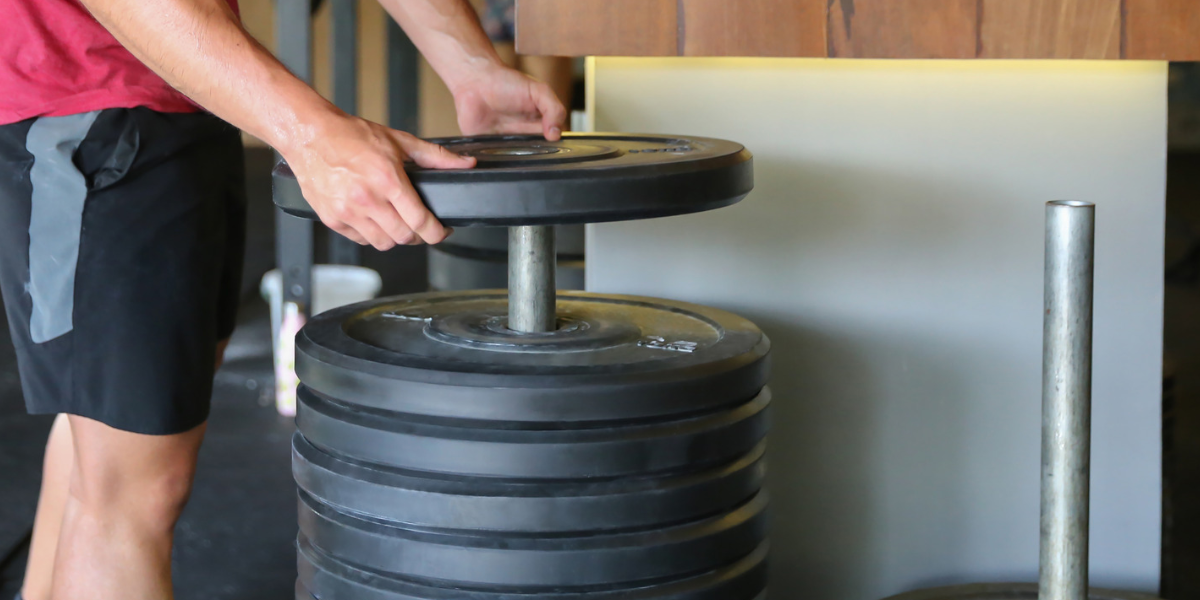
Choosing the right weight in the gym is essential for building muscle, improving strength and exercising safely. If the weight is too light, your muscles may not receive enough challenge to progress. If it is too heavy, you may struggle to maintain proper technique and increase your risk of injury.
The right gym weight is one that allows you to complete your target repetitions with controlled technique while making the final repetitions challenging. You should still be able to maintain good form without swinging, jerking or relying on momentum.
Whether you are joining a gym for the first time, starting strength training or returning after a break, understanding how to select the right weight can make your workouts more effective.
Why Is Choosing the Right Gym Weight Important?
Selecting an appropriate weight helps you balance training effectiveness, technique and recovery.
Here is why it matters:
- Muscle growth: Your muscles need an appropriate training challenge to adapt and grow.
- Strength development: Gradually increasing resistance can help you become stronger over time.
- Exercise technique: Manageable weights make it easier to learn correct movement patterns.
- Workout consistency: Appropriate loads can help you train without unnecessary fatigue.
- Injury risk management: Avoiding weights that compromise your technique can reduce avoidable training risks.
Lifting the heaviest weight possible is not the goal. The goal is to choose a load that matches your current ability and training objective.
How to Choose the Right Weight in the Gym
Follow these steps when selecting a weight for a new exercise.
1. Start With a Light Weight
If you are unfamiliar with an exercise, begin with a light dumbbell, an empty barbell where appropriate, or a manageable machine setting.
Perform a few controlled repetitions to understand the movement.
Check whether you can:
- Maintain a stable body position
- Move through a comfortable range of motion
- Control both the lifting and lowering phases
- Avoid swinging or jerking
- Complete the repetitions without pain
Starting light is particularly important when learning exercises such as squats, bench presses, shoulder presses and deadlift variations.
2. Choose a Target Number of Repetitions
A repetition, or rep, is one complete movement of an exercise. A set is a group of repetitions performed before resting.
Your target repetitions depend on your training goal and the exercise you are performing.
| Training Goal | Common Rep Range | Main Consideration |
|---|---|---|
| Muscle growth | Around 6–15 reps | Challenging sets with controlled technique |
| Strength development | Often 3–6 reps | Heavier loads with appropriate experience and supervision |
| General fitness | Around 8–15 reps | Manageable resistance and consistent technique |
| Muscular endurance | Often 12–20+ reps | Lighter loads and sustained effort |
These are common programming ranges, not rigid rules. Muscle growth can occur across a wide range of repetitions when sets provide sufficient challenge. Beginners should prioritise technique rather than trying to lift heavy weights for low repetitions.
3. Make Sure the Final Repetitions Are Challenging
The right weight should feel manageable at the beginning of a set and increasingly challenging toward the end.
For example, suppose your target is 10 repetitions of a dumbbell chest press.
- If you finish all 10 reps effortlessly and could easily perform many more, the weight may be too light for that particular training goal.
- If you cannot complete the target reps with good technique, the weight may be too heavy.
- If you complete the reps with controlled movement and feel that a few more repetitions would be possible, the load may be appropriate.
You do not need to reach complete muscular failure on every set. Beginners can make progress by finishing sets with a few good repetitions still possible.
4. Check Your Technique Before Increasing the Weight
Never increase the weight simply because someone else at the gym is lifting heavier.
Your technique should remain consistent throughout the set.
Watch for signs that the load may be too heavy:
- Your body swings to move the weight.
- You shorten the movement to finish a repetition.
- Your back position becomes difficult to maintain.
- You drop the weight instead of controlling it.
- You experience sharp pain or unusual joint discomfort.
If these occur, stop the set and reassess the load or technique. If pain persists, seek appropriate professional guidance.
5. Increase the Weight Gradually
Once you can complete your target repetitions with good technique and the exercise feels consistently manageable, consider increasing the resistance slightly.
For example, if you can perform three sets of 10 repetitions with a particular dumbbell weight while maintaining good form, you may be ready to try the next available increment.
Increase the load only if you can still control the movement. Smaller increases are often more practical for exercises involving the shoulders, arms and other smaller muscle groups.
How Much Weight Should Beginners Lift in the Gym?
There is no single starting weight that is suitable for everyone.
The correct load depends on your strength, body size, training experience, exercise selection and mobility. Even two people with similar body weights may need different loads for the same exercise.
Use this approach when starting:
- Learn the exercise with no weight or a light resistance.
- Practise the movement under control.
- Select a weight that allows you to complete your target repetitions comfortably.
- Check whether the final repetitions feel challenging without compromising technique.
- Record the weight and repetitions so you can track progress.
For beginners, a machine can sometimes make it easier to learn a movement because it provides a more guided path. However, machines still require correct setup and technique.
If you are unsure how to use an exercise machine or free weights, ask a qualified trainer for guidance.
How to Choose the Right Weight for Different Gym Exercises
Different exercises involve different muscle groups and movement patterns. You should not expect to use the same weight for every exercise.
Dumbbell Exercises
For exercises such as biceps curls, lateral raises and dumbbell shoulder presses, start with a weight that allows you to move without swinging your torso or shrugging excessively.
If you need momentum to lift the dumbbells, reduce the load.
Chest Press and Bench Press
Choose a load that allows you to control the lowering phase and press the weight without losing stability.
If you are using a barbell bench press, use appropriate safety equipment or a qualified spotter when needed. Beginners should learn the movement before attempting heavy loads.
Squats and Leg Press
Start with bodyweight squats or a light resistance if you are learning the movement.
For the leg press, select a load that allows you to control the movement without lifting your hips off the seat or forcing your knees into an uncomfortable position.
Lat Pulldowns and Seated Rows
Choose a weight that lets you pull smoothly without rocking your torso excessively or using momentum to complete repetitions.
Focus on controlling the movement rather than simply pulling the heaviest load.
Deadlifts and Other Hip-Hinge Exercises
Technique is particularly important for deadlift variations. Learn the movement pattern with a light load and seek qualified coaching if you are unsure about your form.
Do not increase the weight if you cannot maintain a stable position throughout the lift.
What Is Progressive Overload, and When Should You Increase the Weight?
Progressive overload is the gradual increase in training demand over time so your body continues to adapt.
It does not mean increasing the weight at every workout.
You can progress by:
- Adding repetitions with the same weight
- Increasing resistance slightly
- Improving your movement control
- Completing an additional set when appropriate
- Using a suitable range of motion
- Improving consistency across workouts
For example, you might start with 8 repetitions at a manageable weight, then gradually work toward 10 or 12 repetitions. Once you can complete your planned sets with good technique and sufficient effort, a small increase in weight may be appropriate.
Keep a workout log with the exercise, weight, sets and repetitions. This makes it easier to identify genuine progress rather than relying on memory.
Common Mistakes When Choosing Gym Weights
Lifting Too Heavy Too Soon
Trying to impress others or match a more experienced lifter can compromise your technique. Choose weights based on your current ability.
Choosing Weights Based Only on Body Weight
Your body weight does not determine exactly how much you should lift. Exercise experience and individual strength are more useful guides.
Ignoring the Target Repetitions
A weight that is appropriate for five repetitions may not be suitable for a planned set of 15. Select the load based on your workout plan.
Changing Weights Without Tracking Progress
Without recording your workouts, it can be difficult to determine whether you are improving. Track weights and repetitions consistently.
Treating Pain as a Sign of Progress
Muscle effort and fatigue can be normal during training, but sharp pain is not a goal. Stop the exercise if you experience pain and seek professional advice when needed.
Copying Another Person’s Workout
A friend’s weight may be too heavy or too light for you. Your training load should reflect your own strength and technique.
Should You Ask a Gym Trainer to Help Choose Your Weights?
Yes, especially if you are a beginner or learning a complex exercise.
A qualified trainer can help you adjust equipment, learn correct movement patterns, select an appropriate starting load and understand when to progress.
Trainer support can be particularly helpful if you have not exercised regularly, are returning after an injury or are unsure how to structure your workouts.
At Meera’s Fitness Centre, you can explore the available trainers and learn more about its bodybuilding gym in Thane West if your goal is to develop strength and muscle.
Frequently Asked Questions
How do I know if the gym weight is too heavy?
If you cannot complete your planned repetitions with controlled technique, your body swings to move the weight, or you experience pain, the load may be too heavy. Reduce the weight and reassess your technique.
Should beginners lift heavy weights?
Beginners should start with manageable weights and learn proper technique. They can gradually increase resistance as their strength and confidence improve. Heavy lifting is not necessary to establish a productive training routine.
How many repetitions should I do to build muscle?
Many muscle-building programs use sets of approximately 6–15 repetitions, but muscle growth is possible across a wider range. Choose a load that makes the set challenging while allowing good technique.
When should I increase my gym weights?
Increase the weight when you can consistently complete your planned sets and repetitions with good technique and the current load no longer provides enough challenge. Increase gradually rather than forcing progress every session.
Is it better to lift heavy or light weights?
Both heavier and lighter weights can support muscle growth when training is programmed appropriately and sets provide sufficient effort. Heavier loads are particularly useful for developing maximal strength, while lighter loads can also be effective for muscle growth when taken sufficiently close to muscular failure.
Can I use machines instead of free weights?
Yes. Machines and free weights can both be useful for strength training. Choose exercises that suit your experience, goals, mobility and comfort, and learn how to use each piece of equipment correctly.
Conclusion
Learning how to choose the right weight in the gym is an important step toward building muscle, improving strength and exercising safely.
Start with a manageable load, choose a suitable repetition range, maintain proper technique and gradually increase resistance as you become stronger. Track your workouts and avoid comparing your weights with those of other gym-goers.
If you are new to strength training, working with a qualified trainer can help you build confidence and develop a more structured routine.
Explore Meera’s Fitness Centre or learn more about its bodybuilding gym in Thane West to take the next step toward your fitness goals.